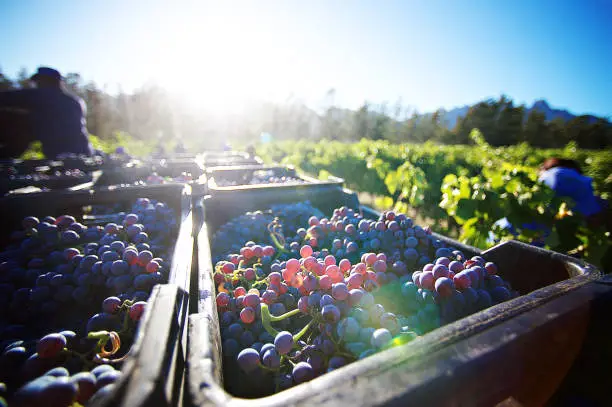
A winery in winter is a quiet place. A winery at harvest is a different world entirely. From late summer into fall, the vineyards are full, the crush pad is running, and the whole property is focused on one thing: turning a year of growing into wine. If you’re deciding on the best time to visit a winery, this is it. Here’s what makes California harvest tourism worth planning a trip around, and how to experience it across the Riboli Family estates.
Harvest Is the Winery at Full Life
For most of the year, winemaking happens slowly and behind the scenes. During harvest, generally late August through October in California, everything happens at once and in the open. Fruit comes in from the vineyards, often picked overnight while it’s cool, and moves straight to the crush pad for sorting and processing. Tanks fill, fermentations bubble, and the air carries the smell of fresh grapes and fermenting juice.
A fall vineyard visit lets you see that energy firsthand. The vines are heavy with clusters right up until they’re picked, the hillsides shift toward autumn color, and the wines you taste come with a backdrop of the work happening around you. It’s the one season when a tasting doubles as a look at the process in motion.
From Vine to Bottle, in Brief
Understanding the basic path from vine to bottle makes a harvest visit far more rewarding:
- Growing and ripening happen all season, as sun, soil, and climate build sugar and flavor in the fruit. Winemakers test the grapes for sugar, acidity, and ripeness to decide exactly when to pick.
- Harvest and sorting come next. Grapes are picked, frequently at night to keep them cool and fresh, then sorted to remove leaves, stems, and any underripe fruit.
- Crush and fermentation follow quickly. White grapes are typically pressed soon after arrival to keep the wines crisp, while red grapes are destemmed and crushed, then fermented on their skins to draw out color and tannin. Fermentation converts the grape sugars into alcohol.
- Aging and bottling finish the job, often with time in oak barrels that adds color, subtle spice, and aromatic depth before the wine is bottled and released.
Where to Experience Harvest with the Riboli Family
The Riboli Family farms estate vineyards across several of California’s most distinctive growing regions, so a harvest visit can mean very different landscapes depending on where you go.
In Paso Robles, the family’s estate vineyards, including Maddalena, Stefano, Pretty Penny, Creston Highlands, and Riboli Creston, stretch across the El Pomar and Creston Districts. Warm days, cool nights driven by breezes through the Templeton Gap, and rocky, calcareous soils produce concentrated, structured reds. You can explore each site on the estate vineyards page.
Farther north in Monterey County, the Santa Lucia Highlands is the cool-climate home of the family’s Windstream collection. Coastal fog and steady afternoon winds off the bay slow ripening and preserve acidity, shaping elegant Pinot Noir and Chardonnay from the estate Sarmento Vineyard. Harvest here highlights the balance that cool-climate sites are prized for, learn more on the Windstream page.
Visiting during harvest connects what’s in your glass to the specific place it came from, which is exactly what estate wines are about.
Tips for a Fall Vineyard Visit
A few things make an autumn trip go smoothly:
Book tastings and tours in advance, since fall is a popular and busy season at wineries. Consider a weekday visit for a calmer, more personal experience. Dress in layers, fall days can be warm at midday and cool by late afternoon, especially in coastal areas. Ask about new releases and just-picked varieties; harvest is a natural time to taste what’s current. And always plan a designated driver or a ride so everyone can enjoy the tasting.
FAQs
When is harvest season at California wineries?
Harvest, or “crush,” generally runs from late August through October, with the exact timing set by each region, variety, and vintage. White and early-ripening grapes are usually picked before the reds.
Why is harvest the best time to visit a winery?
It’s the only season when the full winemaking process is visible, fruit arriving, the crush pad running, and fermentations underway, paired with vineyards at their fullest and fall scenery. It turns a tasting into a front-row look at how wine is made.
Will I be able to see grapes being processed?
Often, yes, though it depends on the day and the picking schedule. Activity comes in waves during harvest, so calling ahead or booking a tour improves your chances of catching the crush pad in action.
What’s the difference between an estate winery and other wineries?
An estate winery grows its own grapes and makes wine from those vineyards, so the wine reflects a specific place. The Riboli Family’s estate vineyards in Paso Robles and Monterey are examples of this vine-to-bottle approach.
Do I need a reservation to visit during fall?
Casual, self-guided tastings often don’t require one, but hosted tastings and tours usually do, and reservations are especially recommended during the busy harvest season.